Monday, 1 December 2014

CAT Trip

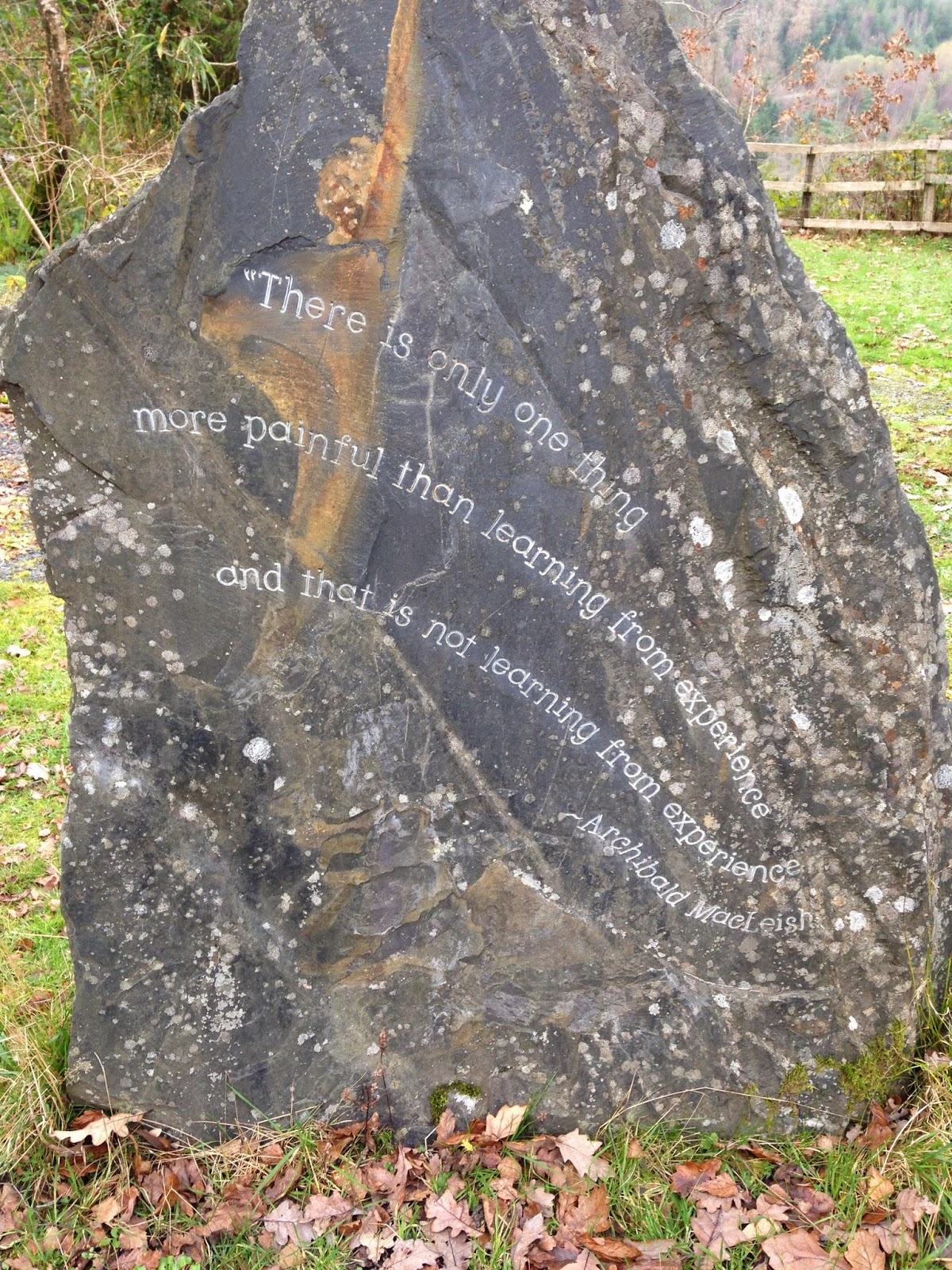
Unfortunately due to illness I was unable to make the trip to the Centre of Alternative Technology with the lecture, however, I was able to visit CAT on the Wednesday of the 2nd Worcester Week, I felt it imperative that I partake in the visiting of the centre as I believed it offered a physical insight into the area of Green Design...to which I was proved correct.


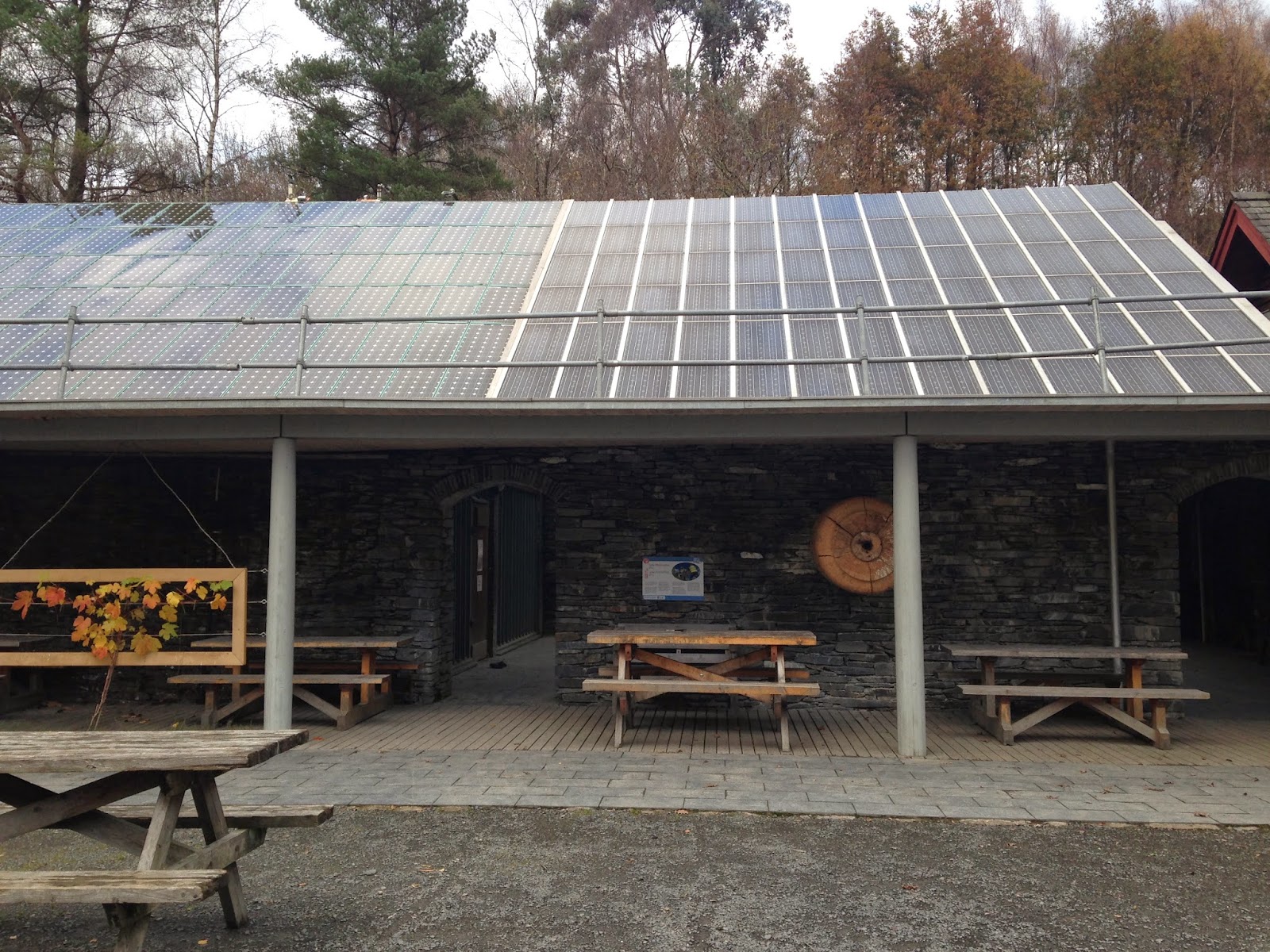
The Centre of Alternative Technology is perched on the top of an abandoned shale quarry located within the idyllic town of Machynlleth (Powys, Mid-Wales), surrounded by a picturesque landscape and plenty of sheep, the centre contributes an alternative green perspective on potential lifestyles. I found that the centre clearly conveyed its intended message, with credible information that prominently supported both its sustainable ideology as well as its intentions towards the Zero Carbon Britain project. 

Throughout the day I was impressed and astounded by it's commitment towards a greener, more environmentally friendly future, automatically resulting in more in depth exploration of the site. The introductory film on CAT contributed a detailed variety of information that enabled me to fully understand the purpose of the centre. Below are the notes I took whilst viewing the video...

  • There has been an increase in climate issues over the years that have not gone unnoticed. 
  • CAT was founded in 1974 and built on an abandoned quarry. 
  • The conservation of finite resources is imperative. 
  • They aim to inspire, inform and enable alternative solutions. 
  • Their electricity is generated from the sun, wind, water and trees, all of the energy from these elements are collected and stored in a micro-grid. 
  • Their water system generates electricity, additionally they utilise sand filters and UV lighting to clean water that can then be drank. The water they use is recycled by into the river. 
  • They provide residential courses. 
  • The WISE Building is made from renewable materials and is designed for low energy consumption. 
  • They have a free information service. 
  • Over 8,000 people pioneering as a result of CAT. 
  • They have 120 staff that are self funded. 
  • Their Zero Carbon Britain project is a sustainable vision and is the 1st fully integrated solution to climate change. 
I found the entire experience increasingly engaging, with every section of the site generating an additional thought on the vast potential of sustainable living, however, 'The Eco House' was my favourite part of the entire centre as I found it immensely informative as well as visually intriguing. The fact that the structure was conveyed as a physical house made it even more fascinating as I wandered between the few rooms looking for facts that were placed in baths and on fridges (for example). Below are the notes I took whilst I was within the Eco House...

  • A bath utilises 3x more water than a shower. 
  • Microwave cooking is more eco-friendly than oven cooking, however, the meals you cook in a microwave are less eco-friendly than the meals you cook in an oven. 
  • Making 1 desktop computer uses 1.8 tons of material. 
  • Food production is responsible for around 10% of UK greenhouse gas emissions. 
  • Spray head taps can save up to 80% of water. 
  • The bathroom takes 60% of your water in the home. 
  • To boil a standard kettle uses 2500 WATS, a singular solar panel produces around 1500 WATS, indicating that you would require at least 2 solar panels producing their highest wattage (1500 each) just to cover the energy used to boil a standard kettle once. 
  • Gas hobs use less energy than electric ones. 
  • Gas oven causes the release of less carbon dioxide than electric ovens. If you turn the oven off 5 minutes before your dinner is done you would save energy (as the food would continue to cook for the final 5 minutes). 
  • If you place a reflective panel behind your radiator it would make it more efficient, this is because the heat from the radiator would be reflected off of the reflective panel resulting in the room being heated faster, rather than (if the reflective panel isn't there) some of the heat would be absorbed into the brick that the radiator is mounted on. 
  • Cut flowers from your garden has no eco-footprint. 
  • A full freezer is more efficient and for each minute a fridge door is open, it requires 3 minutes to cool back down. 
  • If you turn your thermostat down by 1 degree it will save 10% of your heating bill, most people are comfortable at 18 degrees Celsius. 
  • The number of children with asthma and allergies has risen by 50% in the last 30 years. Pollution in the home is not helping. 
Overall, the visit was highly beneficial as it presented a functioning example of individuals attempting to make a difference that will benefit both the world's populous and the environment. They highlighted a diversified alternatives in building and sustainability, my favourite being their walls made by compact earth, these were both functional and surprisingly beautiful as the different tons of brown layered to provide a rustic look that seemed to illuminate under the lighting. Additionally, structures such as the Eco House highlight the factors the most of us either don't know or choose to ignore, the centre makes these prominent features that cannot be disregarded for much longer. It illustrates that climate change will continue to worsen if we don't unite, act and make the relevant sacrifices like turning down the thermostat and installing reflective panels, these acts may not be 'attractive' to some but they will contribute to the Zero Carbon Britain that the future requires. 

Gallery - My Photos taken at The Centre of Alternative Technology 


Inspiration Green Research

Inspiration Green is a fantastic website that highlights an array of alternative elements in relation to the 'green' lifestyle, it presents both artistry and design that experiments with the ideology of renewability. The website illustrates the potential of re-useability as it demonstrates remarkable examples of innovative products that have been adapted and recycled into a secondary function. One of my favourite pages within the Inspiration Green website (http://www.inspirationgreen.com/index.php?q=plastic-waste-lights.html) is 'Plastic Bottles (and more) as never before...', this is due to the fact that it presents incredible imagination regarding design ingenuity, as they portray examples of different materials and products recycled to produce unique lights. Some of which are shown below, accompanied by the matching descriptions which can be found on the website...


(The ColourBall Light as a whole) 


(A Close-up of the ColourBall Light) 

"The Colourball 
By the amazing Heath Nash of South Africa. 
Multicolour flower and butterfly shapes attached to a handmade wire structure. 
Small: 400mm diam - 240 flowers, Medium: 500mm diam, Large: 600mm diam, Extra Large: 800mm diam. 

The Process: 
  • Lots of bottles are found sorted and collected. 
  • They are washed very thoroughly (with bio-degradable detergent) and dried. 
  • The handles and bases are carefully removed, and each bottle is splayed open into a semi-flat 'sheet'.
  • As many flowers as possible are cut from each bottle. 
  • Now each flower has to be formed from a 'flattish' shape into a more 3-dimensional form - each petal is folded in half, and individual lines are creased into each (by hand). This forms the flower and makes it more translucent where the lines are...adding to the detail and finish of the finished piece. (So if a flower has 6 petals, and there are 9 lines on each one, someone has creased 54 lines! For ONE flower). 
  • Finally, One flower is done! 
  • The excess plastic cut offs are returned to the recyclers". 

(Tide Chandelier) 

"Stuart Haygarth's 1.5 meter wide Tide Chandelier made from plastic debris. Made from a collection of 'man made' debris washed up on the Kent coastline. 
www.stuarthaygarth.com". 


(The Straw Chandelier) 

"Gulp Lamp. 
www.mintshop.co.uk". 


(The Plastic Cup Chandelier) 

"By Aeolus. 
www.instructables.com". 


(The Keyboard Parts Lamp) 

"By Nolan Herbut of Alberta, Canada. 
www.coroflot.com". 


(The Eyeglass Chandelier) 


(A Close-up of the Eyeglass Chandelier) 

"Stuart Haygarth -- Optical
Created from over 4500 prescription spectacle lenses. The lenses are hung on monofilament line which hang from a platform. 

www.stuarthaygarth.com". 


(The Tape Lamp)


(A Close-up of the Tape Lamp) 

"The lamp is completely hand assembled in San Francisco from laser cut plexiglass and one hundred micro-cassetes. Transparent House produces only 2-3 lamps a month. $1200. 
www.tapelamp.com". 


(The Milk Jug Lamps) 

"Milkit by Alexandru Adam and Steven Koch at Play Design is a kit designed to assist you in turning a milk bottle in to a stylish table lamp. 
www.atelier29.blogspot.com". 


(The Gramma Lamp) 

"Never thought to crochet the extra speaker wire before?
www.meetsebastian.com". 

This website helps to convey both our inventiveness and resourcefulness in an area of design that is still somewhat under-explored, it indicates the 'stepping stones' we are beginning to take in creating products out of the old...exploring the potential of secondary utilisation.

Research on Mushroom Packaging

Can Mushrooms Replace Plastic and make a better planet to live on?


Styrofoam, expanded polystyrene foam, used in disposable coffee cups, building materials and the predominant form of packaging for electrical products such as computers and televisions, will remain in the environment for thousands and thousands of years.  Totally incompatible biologically with the natural environment, it is both costly to produce; every single cubic foot of this product uses the energy content of one and a half litres of petrol.


(Styrofoam) 

Green development has shown that nature has provided the answer to start eradicating the need for such materials using mushrooms. Using mycelium, the mass of branching filaments that spread submerged below soil or organic matter; natural waste products such as agricultural bi-products can be transformed by the unique self assembling material into polymers.  These can be moulded into materials that have many different properties, such as water and fire resistance, insulating and impact absorption, and are 100 percent compostable when no longer needed. When eventually the product is no longer needed, it can be put back into the natural environment and will improve the quality of the local soil.


(Close-up of Styrofoam) 

To produce such products takes only a few simple steps and can be done locally to helps reduce the carbon footprint of manufacture and transport. The mycelium does all the work, and it will create a product comparable to Styrofoam that has a 100 percent yield rate so produces no waste.

Step 1 – Select the feedstock – something local to the environment, such as oat, rice or corn husks, which will be cleaned, cooked, cooled and pasteurised and inoculated with the mycelium.

Step 2 – Fill a mould with the feedstock.

Step 3 – Grow the mycelium through the feedstock in the dark, process takes a five day growth cycle, the mycelium will have created a matrix of tiny fibres that has digested the feedstock.

Finally you have the manufactured product.


(Mushroom Packaging Example) 


(Mushroom Packaging Example) 


(Mushroom Packaging Example) 

Task 5

1) London Bio-Packaging: http://www.londonbiopackaging.com/

A. How many take away meals were consumed over the course of the 2012 Olympic Games?
14 million take away meals were consumed over the course of the 2012 Olympic Games. 

B. How much waste to landfill were Olympics organisers expecting to have to go to landfill?
8,500 tons of waste were expected to go to landfill, they succeeded in diverting 6,330 tons from landfill. 

C. How many pieces of packaging were needed for the games and by supplying these what did LBF help the games achieve?
120 million pieces of packaging were required for the games, by supplying this, the LBF helped the 2012 Olympic Games achieve the zero waste to landfill policy. 

D. Take a moment to look around their site.
  • How many stages are there in their ‘closed loop’ system? The closed loop system bridges the gap between, 'making', 'recycling' and 'composting'. There are 5 stages, these include = 
  1. Supply, 
  2. Dispose, 
  3. Collect, 
  4. Process, 
  5. Re-use. 
  • What happens at each stage?The company ensures that every single piece of packaging is either recycled or composted, and turned back into packaging ready for reuse. 
  • Is this appropriate for this company? If ‘yes’ then please explain why you think so.Yes, because it enables the company to successfully supply packaging to both larger and smaller companies and businesses. 

E. Look even further around their site. LBP use a wide range of materials.
  • What are ‘bioplastics’? Is there anything that can explain further the oil and carbon savings? Bioplastics are plastics which are made from plants; specifically from the starches found within them. On this section of the website, it identifies oil and carbon savings in a written paragraph, this is additionally supported by an 'eco animation' that provides a visual example of the oil and carbon savings in bioplastics in comparison to normal 12oz plastic cups.  
  • Look at the other materials LBP use. Could you order these in terms of most sustainable , explain why you’ve ordered them like this on your post.


F. What is 'PSM' and what are it’s key properties? Why is this useful?
'PSM' stands for 'Plant Starch Material',  this is a flexible bio-based material which is produced from renewable crops (i.e. potatoes and corn) and is suitable for biodegradable cooking utensils (i.e. cutlery) as it is heat resistant. 

G. What is sugar bagasse and how might it be turned into packaging?
Sugar Bagasse is the waste material produced from harvesting sugar cane for the sugar syrup, packaging is created from this through processes of heating, pulping and pressurised moulding. 

H. Pick one other material listed and explain what it is and what it’s key properties and considerations are.
Palm Leaf is a natural product that is both biodegradable and compostable, the wholeleaf product is simply a washed and pressed leaf as they have no starch or pulp. The palm leaf is between 2-4mm thick and they vary in colour and pattern.

2) WRAP: http://www.wrap.org.uk/

A. First watch this short video from Wrap: https://www.youtube.com/watch?feature=player_embedded&v=XIDmiYctUUg

B. Back to their website - Who are Wrap? Describe what they do in a paragraph.


C. What commercial sectors do they deal with and ‘why’?

D. Do they deal with the idea of'a circular economy? If 'yes' how do they aim to tally with these ideas?

E. What are Wrap’s 3x key priority areas and what do they aim to do in these?

F. Download the excellent ‘Packguide:'A guide to Packaging Eco Design' at: http://www.wrap.org.uk/sites/files/wrap/GG908_final_linked.pdf

G. Now take 10mins to look the guide through – there’s LOADS of good background refs in here!

H. Look at section 4: Design for Re-Use, Recycling and Recovery.

  • Describe 3 key considerations within 'design for re-use'.
  • Describe 3 key considerations within 'design for recycling'.
  • Describe how effective Metal, Glass, Paper and Board and Plastics are and which (in your eyes) of these may achieve the‘most effective’ award for recyclability.

3) INCPEN: http://www.incpen.org/


A. Who are incpen and what do they do?


B. Are they the same as WRAP? If ‘no’ then what do you think the key differences are?


C. Now watch this related video: http://www.youtube.com/watch?v=pB09rDeRxJo


D. After watching the video: 
  • Where do you stand on packaging in supermarkets? Is it a good thing or otherwise?
  • Are there ways in which it could be improved (if ‘yes’ then how?).
E. Do you know what you can recycle domestically after you’ve eaten/drank all those goods you (or your family) buy from supermarkets?
  • Does your Council or university offer up recycling options? If'‘yes’ then what are they? Could they be improved upon at all in some way?
F. See'Library'>'Factsheets, browse through these and pick one that you feel has the most bearing on the project that you’re doing on this module.
  • Why do you feel this fact sheet is appropriate for your main project?
G. Now take a moment to watch this related video: http://www.ted.com/talks/tristram_stuart_the_global_food_waste_scandal

H. After watching the film, do you feel that better designed packaging that uses less resources etc is the only way to improve the way we consume goods – especially food?

4) Food For Thought:

A. Coke and packaging

http://www.youtube.com/watch?v=D7vny5zLhp0

B. Clever Little Bag

http://www.youtube.com/watch?v=vwRulz8hPKI

C. UPS Courier – Sustainable ''Packaging'' video

http://www.youtube.com/watch?v=gcX3EWc_Z6c

D. Plastic wine container:

http://www.youtube.com/watch?v=to2d4JFBSC4

E. Coke Plant Bottle

http://www.youtube.com/watch?v=RzO_7sp8ce4

F. Local sustainable packager:

http://www.biopac.co.uk/

G. For each of'the above, write the title of the video and then 3x observations or more on your blog entry.